
Solar
Keeping Panels Performing: Cleaning and Maintenance Basics
Solar is famously low-maintenance — but not zero-maintenance. A little attention each season keeps your system producing what it was designed to.
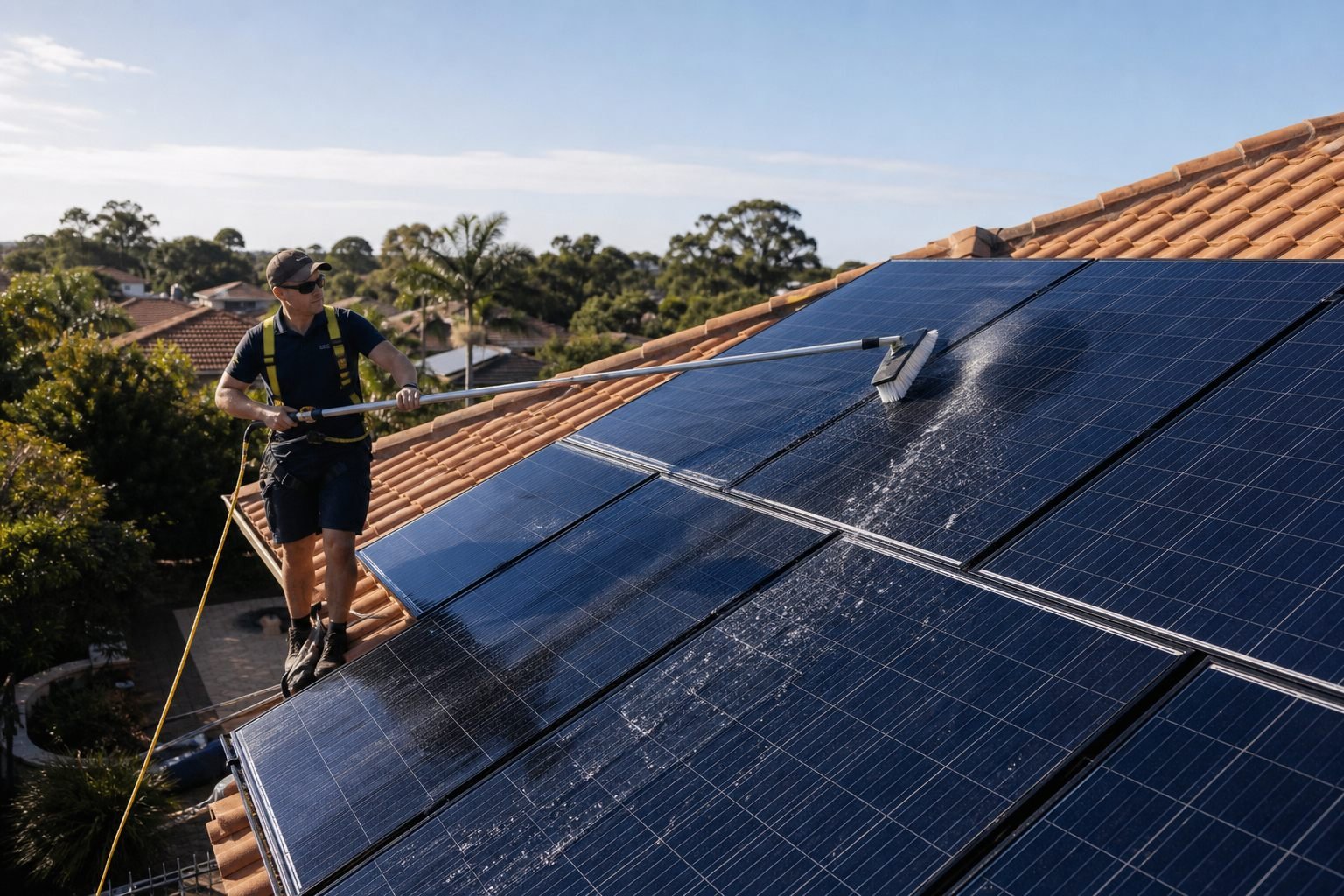
One of the great selling points of solar is that it just sits there and works. That is mostly true — panels have no moving parts and quality hardware carries decades-long warranties. But "low maintenance" is not the same as "no maintenance", and a small routine protects both your output and your warranty. Here is what actually matters, and what you can safely ignore.
Do panels really need cleaning?
In most Australian suburbs, rain does the bulk of the work. Panels tilted at fifteen degrees or more shed dust and pollen naturally with each decent shower. But some sites collect grime faster than rain can clear it: homes near main roads, under flight paths, close to the coast where salt spray settles, or beneath trees that drop sap and attract birds. Flat or low-tilt panels also hold a stubborn film along the bottom edge where water pools and evaporates. If your monitoring shows a slow decline across clear sunny days — not a sudden drop, but a gentle sag compared with the same month last year — soiling is a likely suspect.
How to clean them safely
If the panels are reachable with a soft brush or squeegee on an extension pole from the ground, an early-morning rinse with plain water is fine. Avoid detergents, high-pressure washers, and abrasive pads — all of them can damage the anti-reflective coating or force water into the frame seals. Never hose hot glass on a scorching afternoon, because the thermal shock can crack cells. And if the job needs a ladder on the roof, stop: the savings from clean panels will never outweigh a fall. A professional clean every year or two costs little and comes with the right access equipment.
The checks that matter more than cleaning
Twice a year, walk around and look up. Check for cracked glass, lifted panels after a storm, nesting birds under the array, and vegetation that has grown into the sun path since installation. At the inverter, glance at the status light and confirm the app still reports daily generation. Inside, make sure the solar breaker in the switchboard has not tripped. These thirty-second checks catch the faults that actually cost money — a system silently offline loses far more than a dusty one.
When to call a professional
Book an electrician if you see error codes that persist after a restart, scorch marks or discolouration near isolators, or a sharp unexplained drop in output. Most installers offer a periodic health check that tests string voltages and tightens connections. Think of it like a car service: infrequent, inexpensive, and far cheaper than the failure it prevents.